
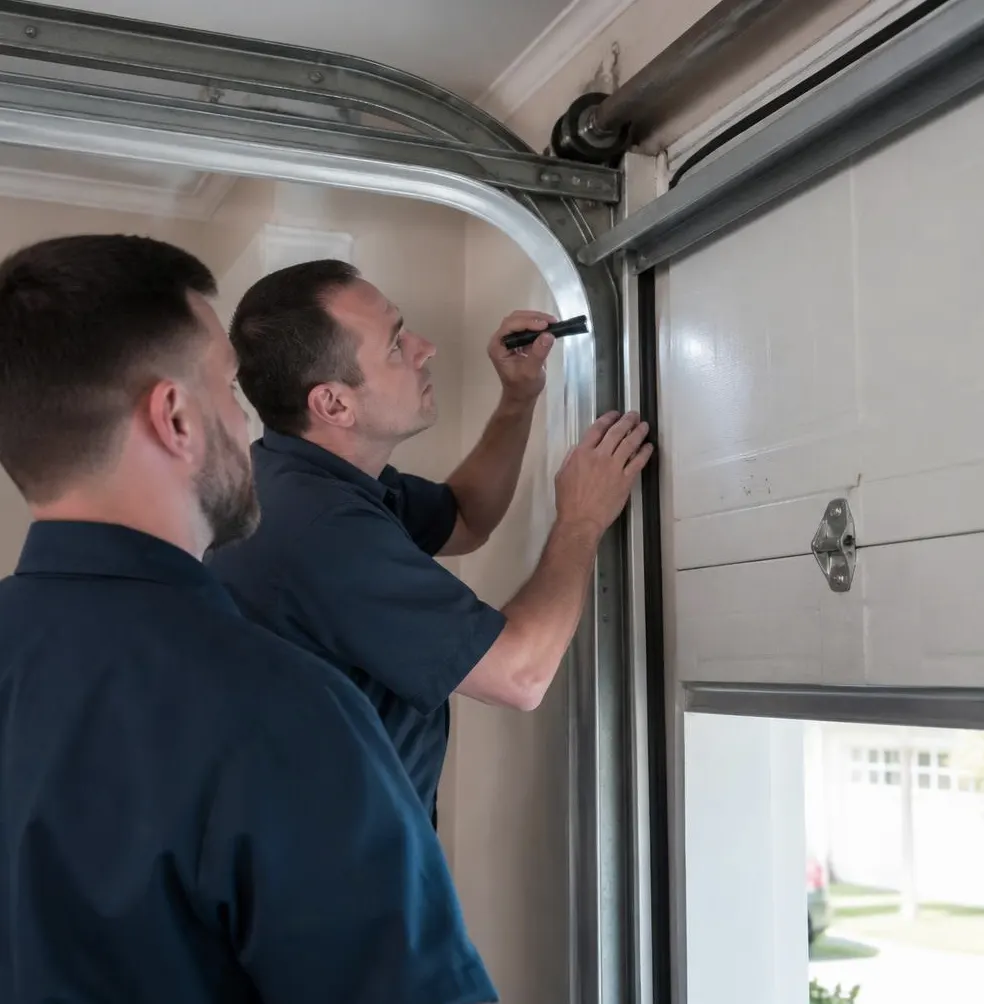
You pull into the garage after the first real cold snap, hit the opener, and the door jerks up six inches, groans, and stops. Your spouse says, "That's a landlord thing, call them." You say, "We've lived here two years, that's on us now." Nobody actually knows, so you both just stand there staring at a half-open door while cold air pours into the mudroom.
This argument comes up constantly in rental housing, especially around here, where a lot of the housing stock is older and garage doors were installed decades before the current tenant or even the current landlord owned the place. Here's how to think about it clearly, plus what should have been checked on day one to avoid this exact moment.
The General Rule: Who Owns What Problem
Most leases follow a basic logic, even when the garage door isn't spelled out line by line:
- Landlords are generally responsible for the systems and equipment that came with the property and fail from normal wear: aging springs, a worn-out opener motor, tracks that have rusted from years of exposure, or a door that's simply reached the end of its service life.
- Tenants are generally responsible for damage caused by misuse or accidents: backing a car into the door, snapping a cable by forcing a door that was already stuck, letting a keypad get smashed, or ignoring an obvious problem until it turns into a bigger one.
- Day-to-day upkeep — replacing remote batteries, keeping the track area clear of stored items, not slamming the door — usually falls to whoever is living there, regardless of what the lease says.
The gray area is maintenance that was never done. If a door hasn't been lubricated or inspected in years and a spring finally lets go, that's wear and tear, not tenant damage, even if it happens on the tenant's watch. The time to settle this isn't after the spring breaks. It's at move-in.
The Move-In Walk-Through Almost Nobody Does
Most move-in checklists cover appliances, faucets, and paint. The garage door gets a glance, maybe a single open-and-close test, and that's it. Given our winters, that's not enough. Here's what actually matters:
Test the full cycle, more than once
Open and close the door several times using both the wall switch and the remote. Listen for grinding, popping, or a motor that strains partway through. A door that works fine once but hesitates on the third try is already showing you a problem.
Check the springs and cables
Look at the springs above the door (torsion) or along the upper tracks (extension). Surface rust is common and not automatically alarming, but visible gaps, stretching, or fraying cable strands are not normal and should be documented in writing before anyone signs anything.
Look at the tracks for salt corrosion
Winters here mean road salt gets tracked into garages on tires and boots, and that salt accelerates rust on tracks and rollers. Run a hand along the track (door unplugged first) and feel for pitting or flaking. This is a classic cause of a door that rolls unevenly or binds in cold weather.
Check the weatherstripping and bottom seal
Pull on the rubber seal along the bottom of the door. If it's cracked, flattened, or missing chunks, cold air and meltwater will come straight through, and that's worth noting before the first nor'easter, not after.
Test the safety sensors
Wave a hand or a broom through the sensor beams near the floor while the door is closing. It should reverse immediately. If it doesn't, that's a safety issue to flag right away, not a wear-and-tear debate for later.
Photograph everything
Panel dents, rust spots, a sluggish motor, a keypad with missing buttons — photograph and date it all, and put it in writing to the landlord or property manager. This single step ends most future arguments before they start.
When the Lines Get Blurry
Older homes with original doors are the hardest cases, because a door that's 20-plus years old is going to have problems eventually no matter who's living there. If something fails that was already showing warning signs at move-in and documented, that points to wear and tear. If something fails suddenly after an impact, forced operation, or obvious neglect during the tenancy, that points to the resident. Keeping that move-in record is what turns a guessing game into a quick, factual conversation.
When to Call New Canaan Garage Door
Whether you're a landlord documenting a property's condition or a tenant who just wants an honest answer about whether something is original wear or a real problem, a quick inspection settles it fast. Our garage door maintenance visits check springs, cables, tracks, and opener function and give you a clear, written picture of what's aging normally and what needs attention. If something's already failed, our spring replacement service gets it handled safely without anyone needing to guess who's at fault.
If you're sorting out a garage door dispute, prepping a rental before new tenants move in, or just dealing with a door that's been acting up since the weather turned, call New Canaan Garage Door. We serve New Canaan, Stamford, Darien, Norwalk, Wilton, Weston, Westport, and Ridgefield, and we're happy to put the actual condition of your door in writing.