
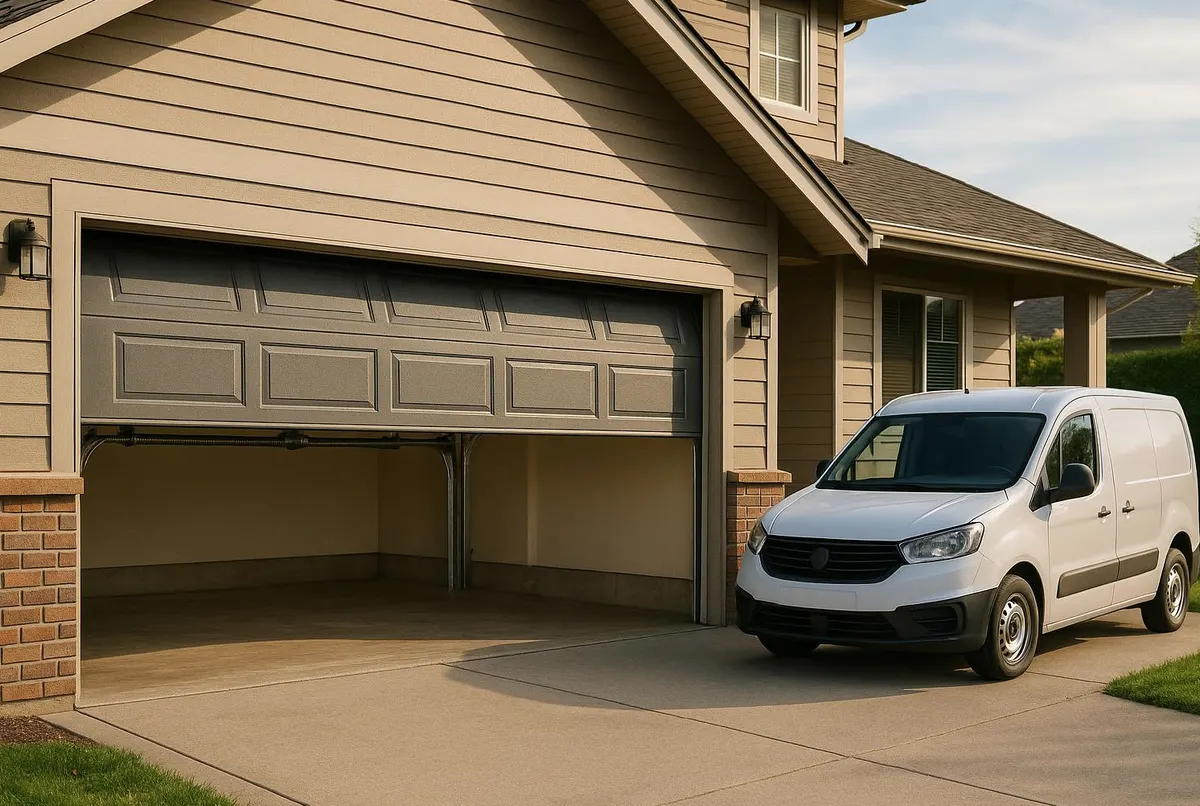
Here's the mistake almost every homeowner makes first: the heating bill creeps up, and someone blames the furnace. It's tempting, because the furnace is the thing that's visibly working hard, cycling on and off, making noise. Cranking the thermostat or scheduling a furnace tune-up feels like doing something. Meanwhile the garage door, which is just sitting there quietly, gets ruled out completely — because "it's just the garage, it's not even heated." That logic is exactly where the argument goes wrong.
Why a cold garage still costs you money
If your garage is attached, it isn't a separate building — it shares at least one wall, and often a ceiling, with living space. That could be a bedroom over the garage, a laundry room beside it, or a kitchen wall backing up to it. Even though the garage itself isn't on the thermostat, its temperature still matters, because heat (or cool air in summer) constantly moves through that shared wall toward whichever side is less comfortable. A garage that sits close to the outdoor temperature all winter is essentially an extra exterior wall pressed right up against your house. The leakier the garage door, the closer the garage gets to outdoor temperature, and the harder your HVAC system has to work to compensate for what's bleeding through that shared surface.
What this actually looks like in an older New Canaan home
A lot of the housing stock around town still has original garage doors — decades-old steel or wood doors that were never insulated to begin with. After enough freeze-thaw winters, those doors develop gaps that weren't there when they were new. Signs worth paying attention to:
- Daylight visible along the bottom or sides of the closed door
- A cold floor or chilly wall in the room directly above or beside the garage
- Frost or condensation forming on the inside of the garage walls
- Drafts noticeable near electrical outlets on the shared wall
- The door rattling or flexing visibly during a nor'easter
- Ice or meltwater pooling at the bottom corners, then refreezing overnight
Any one of these means outside air is getting into the garage far more easily than it should, and that air isn't staying contained — it's working against your heating system all winter and your AC all summer, especially during Connecticut's humid stretches when the garage can trap heat like an oven.
The fix everyone tries first — and why it's not enough on its own
Once people do connect the garage door to the bill, the first move is almost always buying a cheap rubber weatherstrip for the bottom of the door. It's inexpensive, it's a quick DIY afternoon project, and it does help. But it only addresses one of several places air actually gets in. The side and top jamb seals are just as often missing, cracked, or flattened from years of contact, and on older doors they're frequently never been replaced at all. On top of that, steel panels dent and warp over time, and wood doors swell and shrink with humidity, which opens small gaps between sections that no amount of bottom weatherstripping will close. Fixing only the bottom seal and calling it done is why some homeowners swear they "already tried that" and it didn't help.
A quick way to actually check it
Before buying anything, do this walk-through:
- Close the door and look for light gaps along the bottom, both sides, and the top header from inside the dark garage.
- Run a hand along the sides and top while the door is closed — feel for moving air on a windy day.
- Check whether the door closes flush and evenly, or whether one side sits slightly higher — uneven closure often points to a track or cable problem, not just worn seals.
- Look at the panels themselves for dents, bowing, or separation between sections.
- If there's a walk-through door connecting the garage to the house, check its weatherstripping too — it's often overlooked entirely.
When sealing isn't enough and insulation is the real answer
If the door itself is a single layer of uninsulated steel or an old wood door, new weatherstripping will slow the leak but won't stop the temperature swing inside the garage. In that case, an insulated retrofit panel kit or, for doors that are genuinely at the end of their life, a full insulated replacement is the more honest fix. It costs more up front than a $20 strip of rubber, but it's the difference between managing a symptom and actually solving the problem, especially for a door that's taken thirty-plus winters of salt, freeze-thaw cycling, and nor'easter wind.
When to call New Canaan Garage Door
If your door isn't closing flush, won't sit evenly on both sides, or the panels have visible gaps between sections, that's usually a track or cable alignment issue rather than something weatherstripping can fix — our Cable & Track Repair service corrects that so the door actually seats and seals the way it was designed to. And if it's simply time to stop patching an original, uninsulated door, our Garage Door Installation team can walk you through insulated options sized for Fairfield County winters, not just a one-size-fits-all big-box door.
If your garage door is the center of a heating-bill debate at your house, let us settle it. Call New Canaan Garage Door for an inspection, and we'll tell you honestly whether you need new seals, a track adjustment, or a new door — no guesswork required.